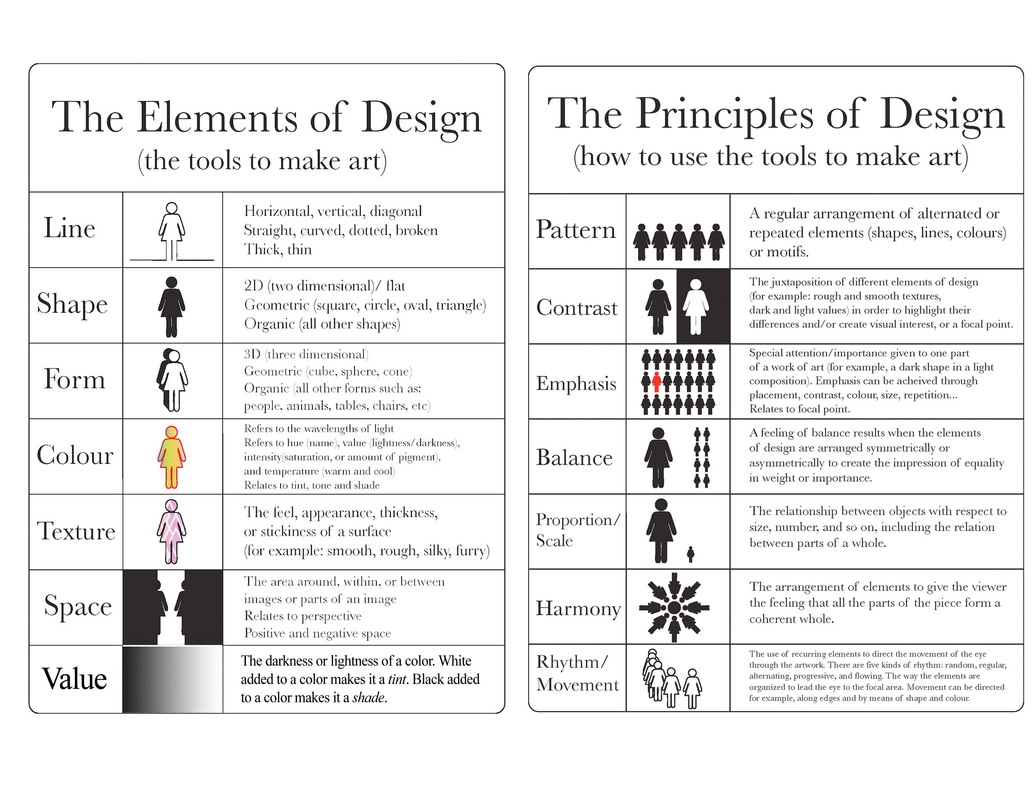
Elements And Principle Of Art - the foundation of visual arts. It's important to understand the basic concepts of Elements and Principles to create a successful and meaningful piece of art.
Elements of Art
Line
Line is the most basic element of art that represents continuous mark made on a surface by a moving point. It can be straight, curved, thick or thin, and can vary in length, direction, and texture. Lines can express emotion and communicate an idea in a piece of art.
Tips: Experiment with different kinds of lines. Curving lines can give an artwork a sense of motion.
Ideas: Draw a landscape using different kinds of lines to mimic different textures like trees or mountains.
How to: Practice drawing straight and curving lines. Use a ruler for straight lines and free hand for curving lines.
Shape

Tips: Use overlapping shapes to create depth in an artwork.
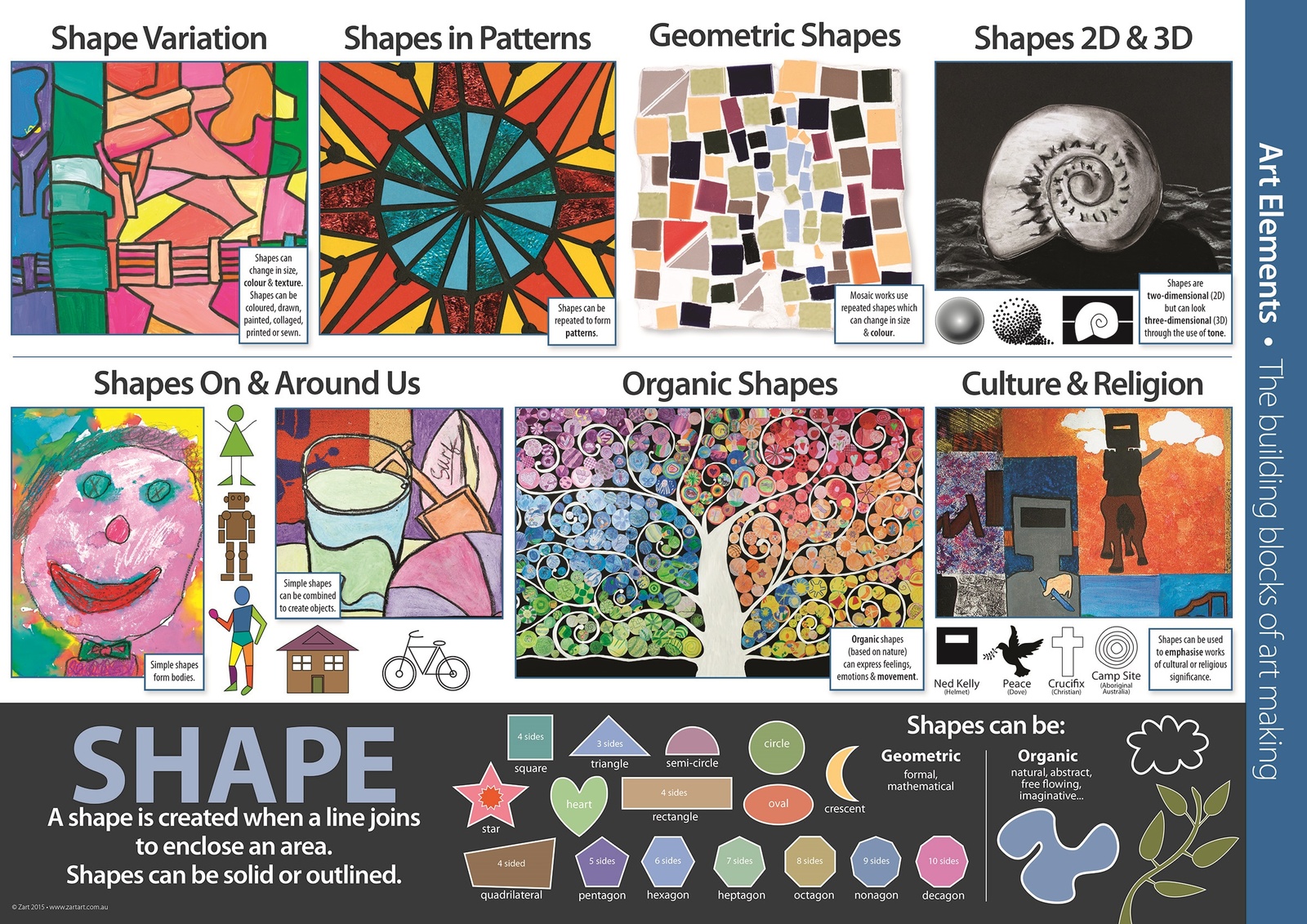
Ideas: Create a self-portrait using organic shapes that describe your personality. For example, wavy lines could represent a free spirit while sharp edges could represent a strong-willed individual.
How to: Practice drawing geometric and organic shapes. Mix and match them to create a unique composition.
Value
 Value is the lightness or darkness in a piece of artwork. It's created by the use of different shades of gray or color that give a sense of depth and form to a two-dimensional artwork.
Tips: Use value to create contrast in an artwork so that certain areas stand out more than others.
Ideas: Draw a still life using light and shade to create a sense of depth.
How to: Practice shading using a graphite pencil. Start with a light touch and gradually build up the darkness of the value using different grades of pencil.
Color
 Color is created by the reflection and absorption of light. It can evoke feelings and emotions in a piece of art. Color can be warm, cool, bright or muted and can be used to create contrast and harmony in an artwork.
Tips: Use a limited color palette to create unity in an artwork.
Ideas: Create a landscape using a single color to evoke a certain emotion like calmness or melancholy.
How to: Practice mixing colors. Start with the primary colors (red, blue, and yellow) and mix them to create secondary colors (green, purple, and orange).
Texture
 Texture is the surface quality of an artwork that can be seen and felt. It can be actual texture, which is created by using different materials or techniques, or it can be implied texture, which is created by the use of lines or values.
Tips: Use texture to create an interesting focal point in an artwork.
Ideas: Create a portrait using mixed media materials like feathers, beads, or fabric for added texture.
How to: Experiment with different materials to create texture. Try using tools like sponges, palette knives, and brushes to create different textures.
Principles of Design
Balance
Balance is the distribution of visual weight in an artwork. It can be symmetrical or asymmetrical and can create a sense of stability, tension or movement in a piece of art.
Tips: Use balance to create a sense of harmony in an artwork.
Ideas: Create a still life using symmetrical balance to create a sense of stability.
How to: Experiment with different kinds of balance. Try creating an artwork using both symmetrical and asymmetrical balance.
Emphasis
Emphasis is the visual importance given to one particular element or area in an artwork. It can be created using color, value, texture, or placement.
Tips: Use emphasis to create a sense of importance or hierarchy in an artwork.
Ideas: Create an artwork using emphasis to create a sense of movement towards one particular area.
How to: Choose one particular element in an artwork to emphasize. Use color, value, texture or placement to give it visual importance.
Contrast
Contrast is the use of opposing elements in an artwork. It can create a sense of tension or balance in an artwork.
Tips: Use contrast to create a focal point in an artwork.
Ideas: Create an artwork using high contrast to create a sense of tension.
How to: Experiment with different kinds of contrast. Try using contrasting colors, values, or textures in an artwork.
Unity
Unity is the overall sense of coherence and harmony in an artwork. It's achieved by the use of repetition, rhythm, and variation.
Tips: Use unity to create a sense of completeness in an artwork.
Ideas: Create an artwork using repeated shapes or patterns to create a sense of rhythm.
How to: Use repetition, rhythm, and variation to create a unified composition in an artwork.
Understanding the Elements and Principles of Art will help you create a successful piece of artwork. Use these tips, ideas, and how-to's in your next piece to take your artwork to the next level.
Find more articles about Elements And Principle Of Art